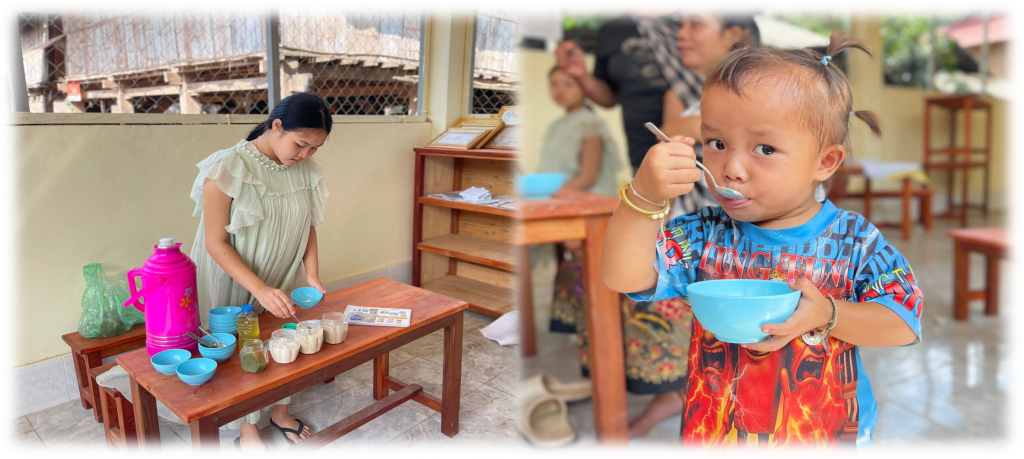
The Community Nutrition Group (CNG) plays a vital role in leading and implementing food preparation activities to improve the nutrition of mothers and children in the community. The details are as follows:
- Organization of Food Preparation Demonstration Meetings:
The CNG will organize food preparation demonstration meetings at least 2 times per month to learn proper food preparation methods according to nutritional principles. In each meeting, two types of food will be demonstrated: Food for mothers and Food for children using a local recipe book containing recipes suitable for the local context.
- Production of Processed (Convenience) Foods to Save Time:
The CNG will carry out food processing activities to help busy mothers prepare meals for their children more quickly. Examples of processed foods include:
- Pre-mix (made from rice and green beans) – can be prepared into child food within 15
- Fish powder (made from dried fish, small fish, or small aquatic animals).
- Leaf powder (made from green leafy vegetables).
These are used to enrich the nutritional value of each meal.
- Creation of “Living Food Preparation Manuals”:
CNG members or the village video production team will produce instructional videos on food preparation in their own ethnic languages. These videos will be shared with fellow members in the village and other villages through online media (Multi-Media Peer Learning – MMPL).
- Management of Equipment and Support Funds:
The CNG will receive a set of food preparation and processing equipment (such as small grinders and food drying racks). In addition, the group committee is responsible for managing nutrition support funds to purchase raw materials for food preparation.
- Linkage with Local Food Sources:
Food preparation activities will emphasize the use of raw materials from Home Nutrition Gardens, goat milk produced in the village, and seasonal natural foods available in the community.
- Distribution to the Most Vulnerable Families:
Processed foods or powdered mixtures produced by the group will be distributed to the poorest and most vulnerable households in the community.
In addition to food preparation, these meetings also serve as a platform for sharing lessons learned, success stories, and promoting the involvement of husbands/men in helping their wives prepare food and care for their children.