
The ESF TOT programme
ESF Training of Trainers Implemented Across 14+1 Districts to Strengthen Safeguard Implementation Capacity
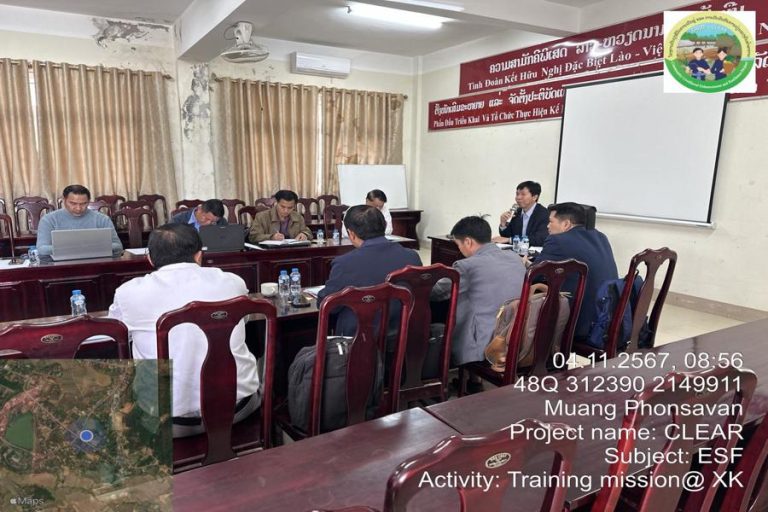
Under the CLEAR Project, a series of Environmental and Social Framework (ESF) Training of Trainers (TOT) sessions were successfully implemented to strengthen district-level capacity for effective application of the World Bank ESF and to support systematic roll-out of ESF requirements at village level.
The TOT programme covered 14 districts plus one additional district within the project area and aimed to enhance the ability of district teams to apply ESF requirements consistently throughout the project lifecycle. Participants included district project management staff, environmental and social (ES) officers, engineers, and designated ESF focal points.
Training Locations and Coverage
The ESF TOT sessions were delivered at three regional locations, enabling cross-district learning and efficient participation:
• Oudomxay Province (30 October – 1 November 2024): Participants from 4 districts
• Xiengkhouang Province (11 – 14 November 2024): Participants from 4 districts plus one additional district
• Salavan Province (November 2024): Participants from 6 districts
Training Content and Focus
The training programme emphasized practical application of the World Bank ESF and covered key safeguard topics, including:
• Environmental and social risk screening and classification;
• Application of Environmental and Social Codes of Practice (ESCOP);
• Labour management and occupational health and safety;
• Community health and safety;
• Gender Equality and Social Inclusion (GESI);
• Grievance Redress Mechanism (GRM); and
• Environmental and social monitoring and reporting.
Interactive sessions, group discussions, and case-based exercises were used to strengthen participants’ ability to apply safeguard tools in community-led infrastructure activities.
Building Sustainable Capacity
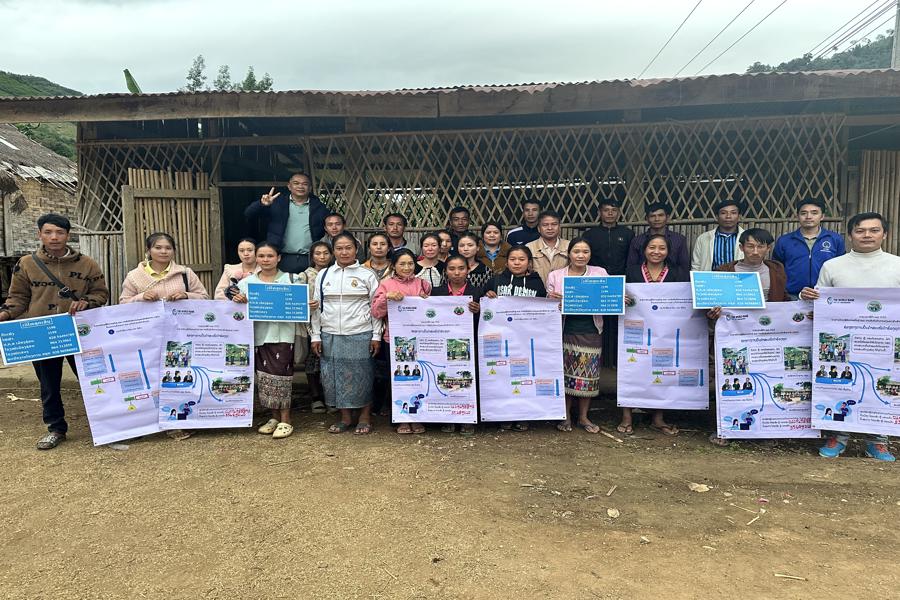
By applying a Training of Trainers approach, the CLEAR Project is establishing a sustainable capacity-building system that enables trained district teams to cascade ESF knowledge to village implementation teams. This approach supports consistent and compliant application of ESF requirements and contributes to the safe, inclusive, and environmentally responsible delivery of community-led activities across approximately 450 target villages.