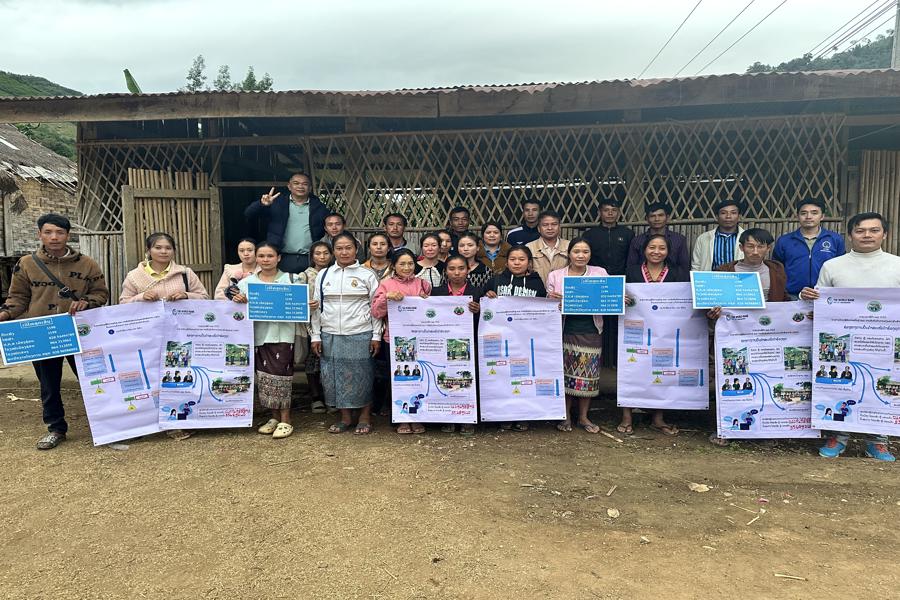

Step-by-Step Flow
1. Village Development Plan (VDP) Approval
– VDP prepared by the village
– Reviewed and approved by District Government
⬇️
2. Initial ES Screening
– Conducted by Engineer and ES Officer
– Screening against ESF requirements
– Identification of potential environmental and social risks
(e.g. land use, safety, water, UXO, vulnerable groups)
⬇️
3. Field-Based ES Survey (Site Verification)
– Site visits conducted May–July 2025
– Scope adjusted based on weather and village conditions
– Verification of actual site conditions and risks
⬇️
4. ES Risk Classification
– Low / Moderate risk determination
– Confirmation of required ES instruments
(e.g. ESCOP, site-specific mitigation measures SS-ESMP)
⬇️
5. Preparation of Mitigation Measures
– Practical and proportionate mitigation identified
– Integrated into technical design and construction planning
– Roles and responsibilities clarified
⬇️
6. Public Consultation & Disclosure
– Village-level consultation conducted
– Explanation of CRI scope, ES risks, mitigation measures, and GRM
– Feedback collected from community members
– Inclusive participation (women, elderly, vulnerable groups)
⬇️
7. Technical Drawing Confirmation Meeting
– Engineers present and confirm final drawings
– Community comments incorporated
– Final agreement reached at village level
⬇️
8. Final ES Clearance for Implementation
– ES requirements confirmed
– Designs and mitigation measures finalized
– CRI activity approved to proceed
⬇️
9. Construction & ES Monitoring
– Implementation of mitigation measures
– Regular ES monitoring by district and project teams
– GRM operational during construction
⬇️
10. Completion & Post-Implementation Review
– Verification of ES compliance
– Documentation of lessons learned
– CRI activity formally completed
– Key Principles Applied Throughout the Process
– Early risk identification
– Community participation and transparency
– Proportionate mitigation
– Integration of ESF into engineering design
– Continuous monitoring and accountability